What Is Katazome?
Japanese Textile Arts Katazome is a traditional Japanese resist-dyeing technique that uses hand-cut stencils and rice paste to create layered patterns on cloth. Developed in Japan centuries ago, katazome combines craftsmanship, precision, and surface design to produce textiles that are both functional and deeply artistic.
The word itself comes from two Japanese words:
“kata” meaning stencil and “zome” meaning to dye.
In katazome, intricate patterns are first cut into handmade stencil paper called katagami. A rice-paste resist is then applied through the stencil onto fabric using a flat spatula or brush. Once the paste dries, layers of dye or pigment are brushed, painted, or immersion-dyed over the cloth. Wherever the rice paste remains, the dye is resisted — revealing the pattern beneath after the paste is washed away.
For centuries, katazome was used to decorate everyday textiles in Japan, including kimono fabrics, futon covers, noren curtains, workwear, and ceremonial cloths. Today, artists and textile designers continue to adapt the process in both traditional and contemporary ways.
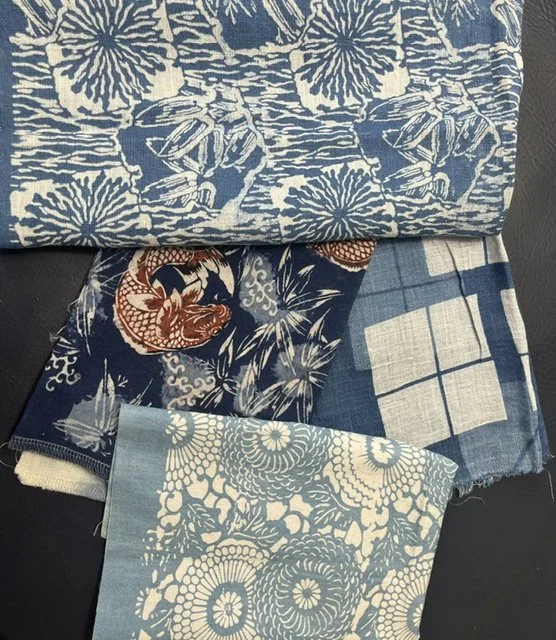
Katazome fabrics dyed with indigo
A Process Rooted in Craft
What makes katazome unique is the balance between structure and spontaneity. The stencil provides repetition and rhythm, while the hand application of paste and dye creates subtle variations that give the cloth life and movement.
Traditional katazome often includes:
Hand-cut katagami stencils
Rice-paste resist
Natural or synthetic indigo dyes
Layered pattern work
Hand-painted detail
Repeated motifs inspired by nature, geometry, and Japanese design traditions
Many historic stencils were reinforced with delicate silk mesh, allowing extraordinarily detailed designs to remain stable during repeated use.
Katazome and Indigo
Katazome is frequently associated with Japanese indigo dyeing, or aizome, where white resisted patterns emerge against deep blue cloth. The combination of stencil resist and indigo creates some of the most recognizable textiles in Japanese fiber traditions.
Contemporary artists may also use:
Pigment dyes
Fiber-reactive dyes
Earth pigments
Layered discharge or over-dye techniques
Mixed media and stitched surfaces
Why Artists Love Katazome
Katazome offers a unique bridge between printmaking, painting, and textile design. It appeals to artists who enjoy process-driven work, surface layering, and the meditative rhythm of repeated pattern.
Because the process is highly tactile and hands-on, each piece carries evidence of the maker — subtle brush marks, shifts in pressure, and the organic irregularities that make handmade textiles so compelling.
At Aya Fiber Studio and Aizome Studio by Suzanne Connors, katazome is explored through both traditional foundations and contemporary surface-design approaches, honoring the history of the technique while encouraging personal interpretation and experimentation.
The Beauty of Slow Cloth
More than simply a dye process, katazome reflects a philosophy of thoughtful making. It invites artists to slow down, work intentionally, and engage deeply with cloth, pattern, and material.
In a world of digital printing and mass production, katazome preserves the beauty of the handmade — where every layer, stencil, and brushstroke becomes part of the story embedded within the fabric.
Learning Katazome Today
Today, katazome is practiced by contemporary textile artists around the world who are drawn to its balance of precision, rhythm, pattern, and hand-crafted surface design. While rooted in centuries-old Japanese traditions, the process continues to evolve through modern textile art, indigo dyeing, and mixed-media practices.
Suzanne Connors teaches katazome through immersive workshops and Japanese textile intensives at studios and arts organizations across the United States, including SEFAA in Georgia, Madeline Island School of the Arts, Appalachian Center for Craft, and Sanborn Mills Farm, as well as through the Aizome Signature Series at Aya Fiber Studio.
Upcoming Katazome & Japanese Textile Workshops
June 11–14, 2026 — SEFAA Katazome Workshop
July 13–17, 2026 — Madeline Island School of the Arts Workshop
August 2–7, 2026 — Appalachian Center for Craft Workshop
August 12–17, 2026 — Sanborn Mills Farm Workshop
March 22–26, 2027 — Katazome: Resist & Reveal — Aizome Signature Series
The Aizome Signature Series workshop Katazome: Resist & Reveal is an immersive five-day exploration of traditional Japanese stencil resist techniques, layered dye applications, katagami-inspired design, and contemporary approaches to textile surface design.
Register for Katazome Workshop at Aya Fiber Studio Here→
Continuing the Journey Into Japanese Indigo
Katazome is closely connected to the broader tradition of Japanese indigo dyeing, or aizome, where resist techniques and hand-dyed cloth come together through layered process and craftsmanship. One of the most revered forms of indigo dyeing in Japan uses sukumo — composted Japanese indigo leaves that are fermented to create a living natural indigo vat.
In an upcoming journal article, Suzanne Connors will explore the history and process of traditional sukumo indigo fermentation, including the creation and maintenance of living indigo vats used in contemporary Japanese textile practice.
A live sukumo vat will also be created and used during the Shibori Mastery: Cloth, Process & Indigo Retreat (January 18–28, 2027), part of the Aizome Signature Series at Aya Fiber Studio.
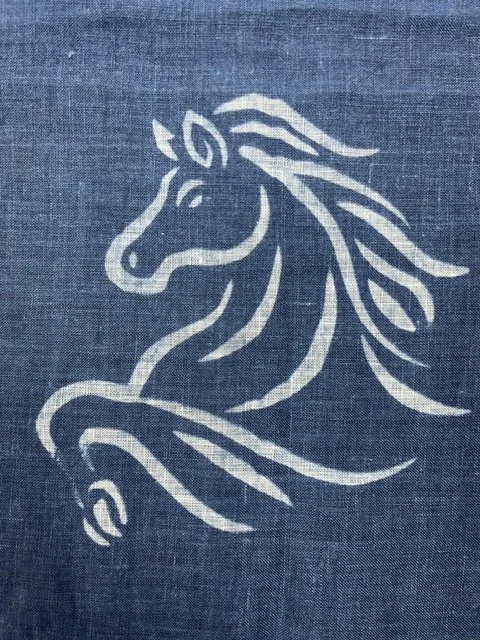
2026 Year of the Horse
LEARN More about the Shibori Mastery Retreat- Jan 2027 (limited space) →
#katazome, #Japanese textile art,#Japanese stencil dyeing,#Japanese resist dyeing, #katazome technique, #katagami stencil, #Japanese indigo dyeing, #aizome,#shibori and katazome, #traditional Japanese textiles, #rice paste resist, #indigo dyeing techniques, #Japanese fiber art, #textile surface design, #handmade Japanese textiles