Types of Indigo Vats: Understanding the Blues Behind the Blue
Not all indigo vats are the same.
Every vat carries its own rhythm, chemistry, maintenance level, smell, timing, and relationship to the cloth.
One of the most common questions I hear in workshops is:
“Which indigo vat is best?”
The answer is surprisingly simple:
The “best” vat depends on the experience you want to create, the amount of time you have, the scale of the work, and how deeply you want to engage with the process.
At Aya Fiber Studio and through Aizome Studio | Suzanne Connors, I use different types of vats for different workshops and teaching environments. Because our studio hosts many students and many kinds of textile processes throughout the season, I build vats intentionally for the needs of each class.
Every vat gives blue.
But the path to that blue can feel very different.
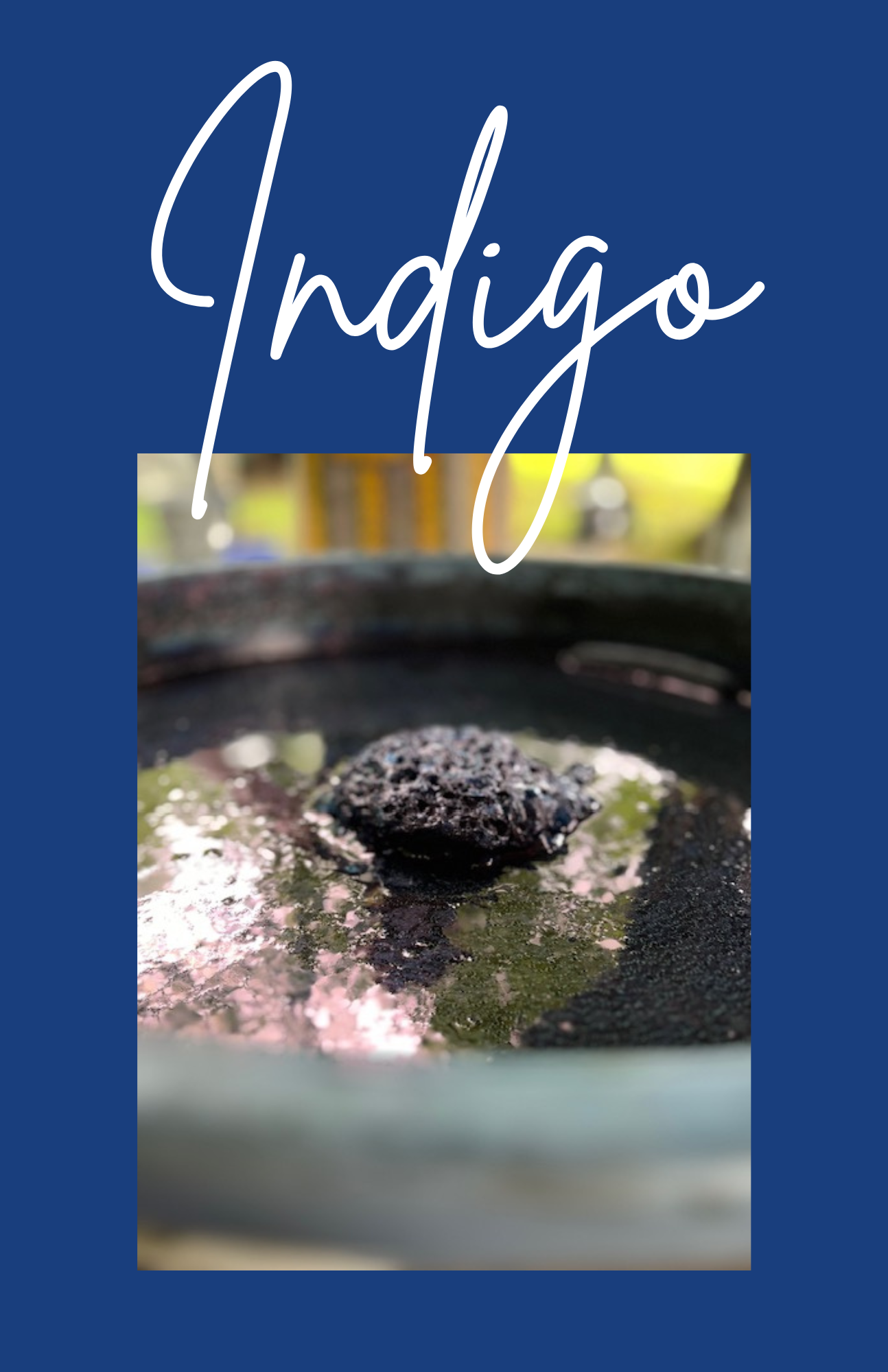
New Indigo E-book available on website
What Makes Indigo Different?
Unlike most dyes, indigo is not naturally water soluble.
To dye with indigo, the pigment must first be transformed into a reduced state — meaning oxygen is removed so the indigo can dissolve into the vat and penetrate the cloth.
When the cloth is removed from the vat and exposed to air, the oxygen returns and the fabric slowly turns from green to blue.
That magical transformation never gets old.
1. Pre-Reduced Indigo Vats
Fast, Accessible & Excellent for Short Workshop
Pre-reduced indigo is often misunderstood.
Many people assume it is “synthetic” simply because it works quickly. In reality, many pre-reduced indigo products still use natural indigo pigment — they simply contain added reducing agents that allow the vat to come into reduction more rapidly.
These vats are practical, reliable, and especially useful in teaching environments.
Why I Use Them
For one-day workshops or large groups, pre-reduced vats allow students to begin dyeing quickly without spending most of the class waiting for a vat to develop.
This keeps the focus on:
Shibori technique
Cloth manipulation
Pattern understanding
Repetition and control
Layering and overdyeing
Advantages
Quick setup
Reliable color
Easier for beginners
Excellent for workshops and demonstrations
Lower maintenance
Challenges
Shorter working life
Less connection to traditional fermentation processes
Some artists feel the experience is less “alive”
That said — beautiful work can absolutely be created from a pre-reduced vat.
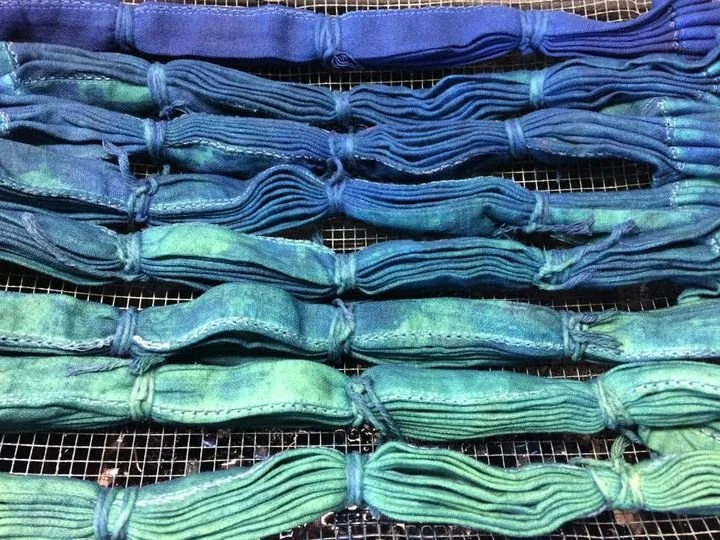
Freshly dyed indigo oxidizing from green to blue
2. Fructose Indigo Vats
Gentle Reduction & Beautiful Depth
The fructose vat is one of my favorite natural vats for small immersive workshops.
Instead of stronger chemical reducers, the vat uses fructose (often from fruit sugar) along with lime to create reduction.
These vats tend to feel quieter and slower.
Why I Use Them
For two-day workshops, students have enough time to begin understanding not only the dye results, but also the living behavior of the vat itself.
Participants start learning:
How reduction works
Surface bloom
Temperature balance
Oxygen management
Daily maintenance
Advantages
More natural process
Beautiful layered blues
Gentler studio environment
Excellent educational tool
Challenges
Slower startup
More sensitive to temperature
Requires maintenance and observation
The fructose vat rewards patience.
3. Iron Indigo Vats
Historical Simplicity & Deep Connection to Process
Iron vats use iron and alkaline materials to create reduction.
These vats can produce rich, beautiful blues while connecting students more directly to historical dye traditions.
Iron vats are often less predictable than pre-reduced vats — but that unpredictability can become part of the learning.
Advantages
Traditional approach
Rich color possibilities
Strong educational value
Encourages deeper understanding of vat behavior
Challenges
Requires monitoring
Can exhaust more quickly
Sensitive to contamination and oxygen
For many artists, the vat itself becomes part of the practice.
4. Sukumo Indigo Vats
The Deepest Tradition
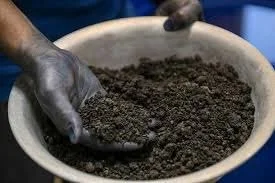
Sukumo Indigo Dye
Sukumo is composted Japanese indigo leaves that have been carefully fermented over time.
Working with a sukumo vat is very different from simply mixing dye powder into water. The vat becomes a living system requiring daily attention, feeding, temperature control, patience, and respect.
These vats are not ideal for quick workshops.
They are ideal for immersion.
Why I Reserve Them for Retreats & Intensive Study
A true sukumo experience takes time:
Time to build the vat
Time to maintain reduction
Time to understand the rhythm of fermentation
Time to dye repeatedly over many days
This is why I typically reserve sukumo vats for longer retreats or advanced study experiences such as the upcoming Aizome Signature Series intensives. We will be using sukumo for the Shibori Mastery: Cloth, Process & Indigo Retreat in January 2027
Extraordinary depth and complexity
Historic Japanese process
Living fermentation experience
Deep connection to traditional aizome practice
Challenges
Daily maintenance
Temperature sensitive
Requires commitment and observation
Not practical for many short-term teaching situations
A sukumo vat asks for relationship, not convenience.
So Which Indigo Vat Should You Choose?
The answer depends on your goals.
If You Want…Consider…
Quick learning & immediate dyeing pre-reduced vat
Natural process with manageable maintenance Fructose vat
Historical process & experimentation Iron vat
Deep traditional immersion Sukumo vat
There is no hierarchy of legitimacy here.
Only different relationships to the process.
Indigo Is More Than a Recipe
One of the most important things students discover is that indigo is not simply about “getting blue.”
It is about:
Learning observation
Understanding timing
Respecting materials
Working with air, temperature, alkalinity, and patience
Accepting that the vat changes every day
The vat teaches attentiveness.
And perhaps that is why indigo continues to fascinate textile artists generation after generation.
Studying Indigo in Person
At Aya Fiber Studio and through Aizome Studio | Suzanne Connors, our indigo workshops range from introductory shibori classes using pre-reduced vats to immersive natural indigo and sukumo experiences focused on process, cloth, and traditional practice.
Because class sizes remain intentionally small, students have time to work closely with the vats, ask questions, and develop confidence through repetition and guided practice.
Blue is only the beginning.
Whether you are just beginning your indigo journey or exploring deeper traditional practices, understanding the character of different vats changes the way you approach cloth, process, and time itself.
For those wishing to continue learning at home, the new Indigo Foundations e-book is now available through the studio website.
ALL Shibori Signature Series Workshops→
#IndigoDyeing #Aizome #Shibori #NaturalIndigo #Sukumo #TextileArt #JapaneseTextiles #SurfaceDesign #FiberArt #IndigoVat #Katazome #AyaFiberStudio #AizomeStudio #SlowCraft #TextileWorkshops