Katazome & Katagami: Preserving the Art of Japanese Stencil Dyeing
There is a quiet discipline at the heart of Japanese textile traditions.
The careful mixing of rice paste.
The sound of a blade moving through handmade paper.
The deep blue of indigo slowly emerging from the dye vat.
These are not fast processes. They were never meant to be.
For centuries, Japanese artisans have practiced Katazome — a refined method of resist dyeing that combines hand-cut stencils, rice paste resist, and layered color to create textiles of extraordinary beauty and precision. While the finished cloth often appears effortless, the process behind it requires years of study, patience, and repetition.
At the center of katazome lies the relationship between pattern, cloth, and the human hand.
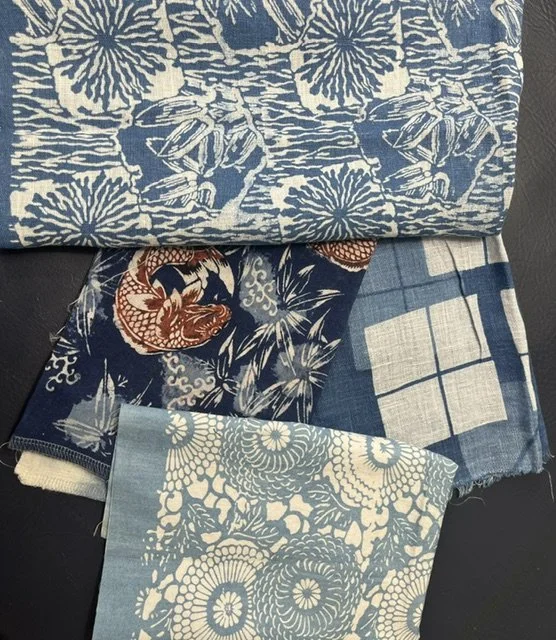
Image: Suzanne Connors Katazome Textiles
What Is Katazome?
Katazome is a traditional Japanese resist-dyeing technique in which rice paste is applied through hand-cut stencils onto fabric. The paste protects areas of the cloth during dyeing, allowing intricate patterns to emerge once the resist is washed away.
Historically, katazome was used to decorate kimono, workwear, futon covers, noren curtains, and ceremonial textiles. Designs ranged from bold geometric repeats to delicate nature-inspired motifs featuring grasses, waves, maple leaves, hemp patterns, and flowing water.
The beauty of katazome lies not only in the imagery itself, but in the balance between precision and imperfection. Slight shifts in placement, tiny irregularities in the stencil, and subtle variations in dye create textiles that feel deeply alive.
The Importance of Katagami Stencils
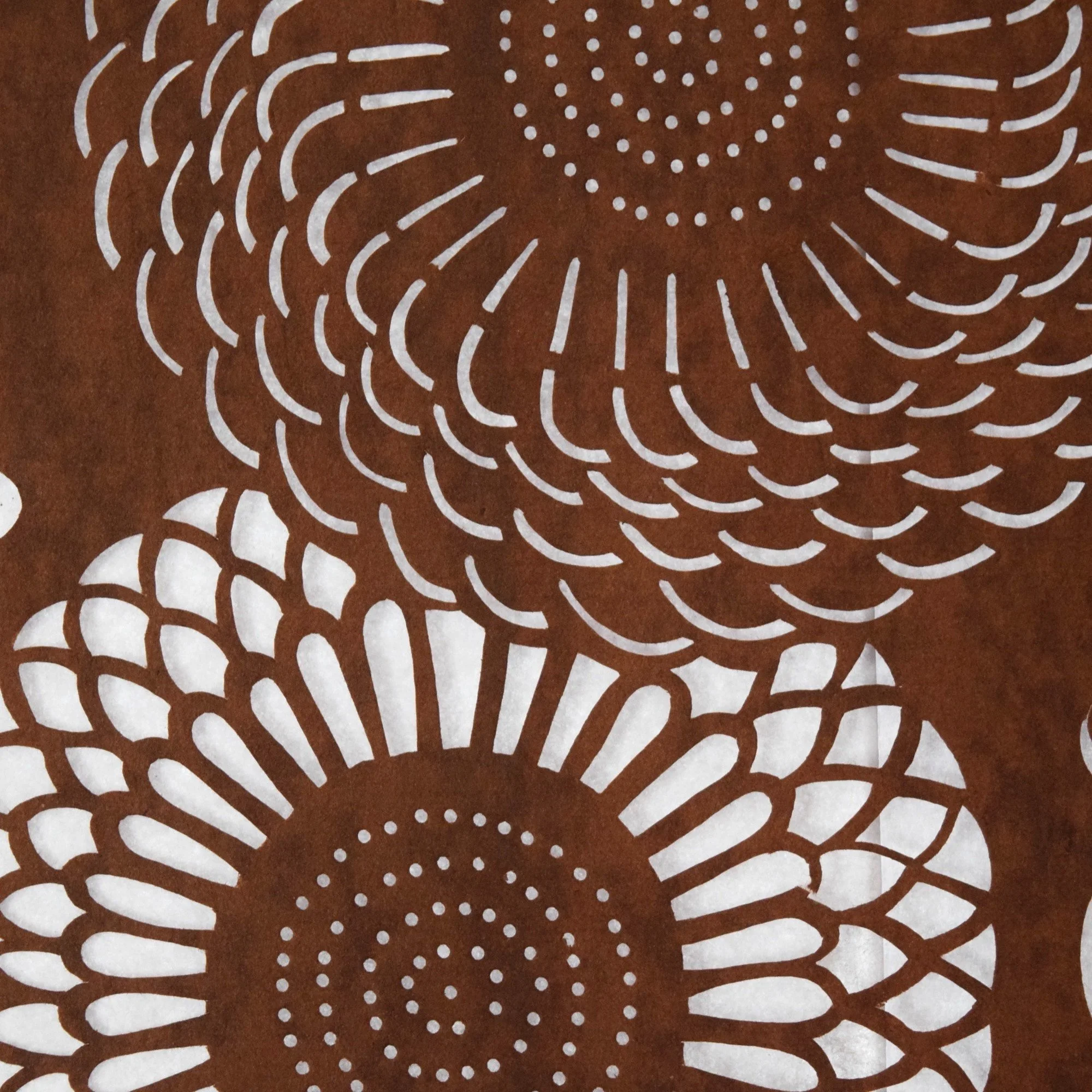
Behind every katazome textile is the stencil — known as katagami.
Traditional katagami are created from layers of handmade washi paper strengthened with persimmon tannin. Each stencil is cut entirely by hand using specialized knives and punches designed for different types of marks and patterns.
The process requires extraordinary control. Every cut must preserve enough paper structure to hold the design together while allowing the pattern to flow seamlessly across cloth.Make it stand out
Whatever it is, the way you tell your story online can make all the difference.
Japanese stencils, particularly katagami stencils, are primarily cut in the Ise district of Mie Prefecture. This region — especially the city of Suzuka — has long been recognized for its extraordinary stencil craftsmanship and remains an important center for preserving the tradition today.
Stencil makers use a variety of cutting techniques, including push cutting and drill carving, each producing distinct visual effects and textures within the design. Learning how these stencils are created deepens our appreciation for every stage of the katazome process — from the first knife cut to the final dyed cloth.
In Japan, craft traditions are often preserved through direct experience, observation, and repetition. Watching artisans work reveals a level of concentration and discipline difficult to fully understand through photographs alone.
Rice Paste, Indigo, and Process
Once a stencil is prepared, it is carefully placed onto cloth and rice paste resist is pushed across the surface using a flat spatula. After drying, the fabric is dyed — traditionally with indigo, though other pigments and natural dyes may also be used.
There is rhythm in the repetition:
align, paste, lift, repeat.
The process rewards patience and attentiveness. Every stage influences the final cloth.
Indigo is particularly powerful in katazome because of its depth and clarity. The contrast between deep blue and untouched cloth allows the patterns to emerge with striking precision while still retaining softness and movement.
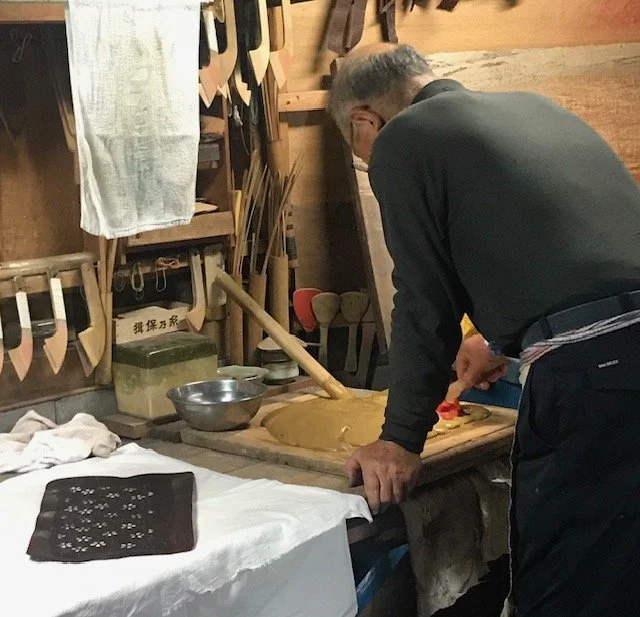
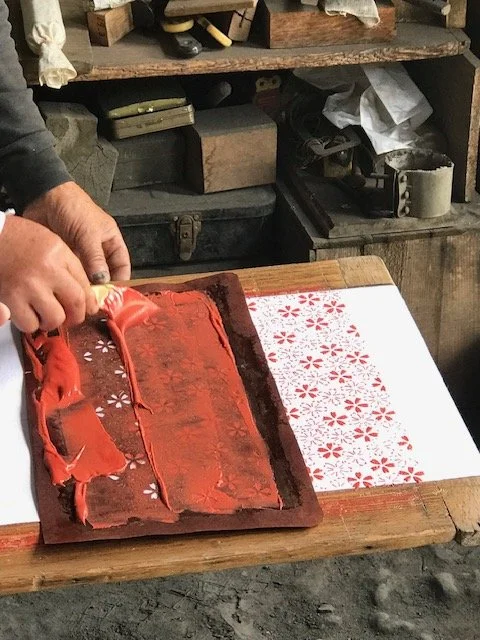
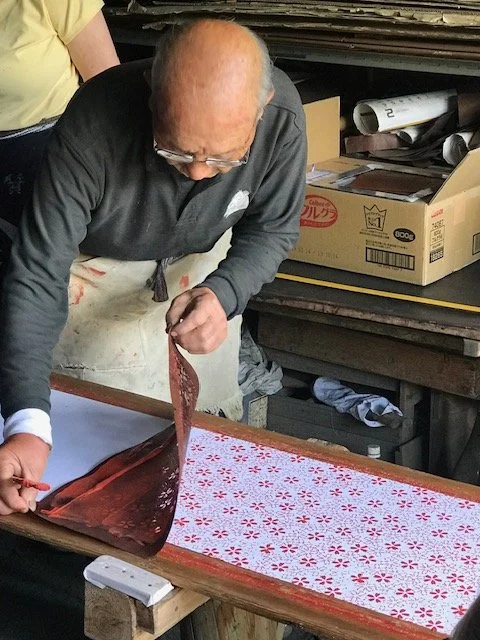
All Images: Noguchi Studio, Tokyo JP
A Visit That Changed My Understanding of Cloth
One of the greatest privileges of my textile studies in Japan was visiting the workshop of Hiroshi Noguchi, a sixth-generation dyer specializing in indigo katazome.
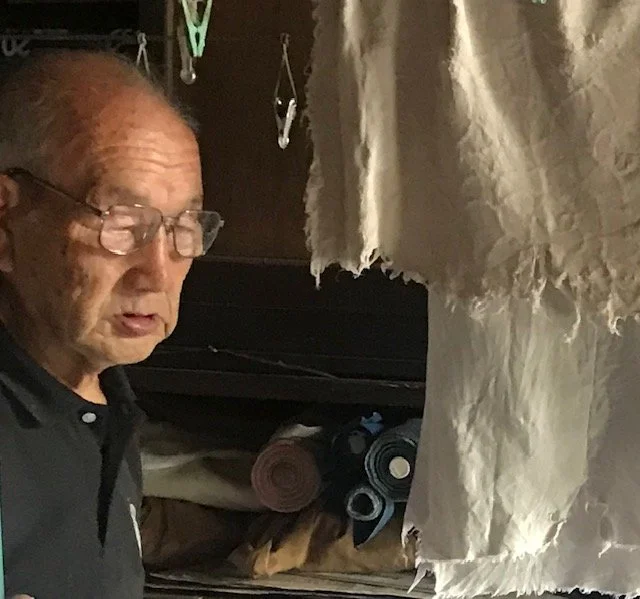
Hiroshi Noguchi- 6th Generation Katazome Artist- A national Treasure
Established during the late Edo period (1615–1868), the Noguchi family business originally specialized in small-scale stencil dyeing, known as komon, for the formal attire worn by samurai. Following the dramatic cultural shifts of the Meiji period and the loss of military patronage in the 1870s, the family adapted by transitioning into larger-scale stencil dyeing for kimono production.
In the early 1920s, the workshop moved from Kyōbashi in central Tokyo to Hachiōji, where the tradition continues today.
Today, Mr. Noguchi works alongside his son, continuing techniques and artistic knowledge passed through generations. His grandson — the eighth generation — is still young enough to be riding his bicycle, yet represents the future of a remarkable family tradition that has survived enormous cultural and economic change.
The Noguchi workshop supplies textiles exclusively to Chikuzen, one of Tokyo’s most respected kimono stores.
Visiting Mr. Noguchi profoundly shaped my own understanding of katazome.
Seeing authentic tools, handmade stencils, indigo-dyed cloth, and traditional working methods firsthand gave me a much deeper appreciation for the discipline and intention behind Japanese textile traditions. Watching the process unfold inside a working studio — rather than in a museum setting — revealed the living nature of the craft.
That experience inspired my continued passion for katazome and strengthened my commitment to using authentic tools, traditional materials, and historically rooted processes whenever possible in my own work and teaching.
Learning Katazome Through Hands-On Study
The best way to truly understand katazome is through practice.
Over the coming year, I will be teaching several katazome workshops at venues across the Southeast as well as at Aya Fiber Studio in Florida. These workshops explore stencil design, rice paste application, indigo dyeing, layered surface design, and the rich history behind Japanese resist techniques.
Students experience the slow, intentional rhythm of the process while gaining a deeper appreciation for the craftsmanship behind traditional Japanese textiles.
Whether you are new to surface design or an experienced fiber artist, katazome offers endless opportunities for exploration through pattern, repetition, and cloth.
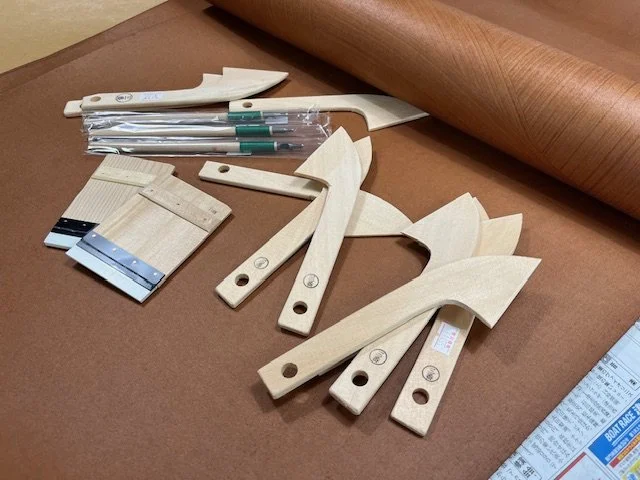
Traditional tools and katagami papers used in my katazome Workshops
Interested in learning the art of katazome and Japanese resist dyeing?
Join Suzanne Connors for immersive workshops at Aya Fiber Studio and select venues across the Southeast. Explore authentic Japanese textile techniques through hands-on study, indigo dyeing, stencil design, and traditional surface design processes.
See ALL on the Road Katazome Workshops (Summer 2026) →
Aya Fiber/ Aizome Studio KATAZOME WORKSHOP →
Katazome: Resist & Reveal
Mon, Mar 22, 2027 – Fri, Mar 26, 2027
Explore ALL Aya Fiber Studio Workshops→
Space in workshops is intentionally limited to allow for individualized instruction and meaningful hands-on learning.
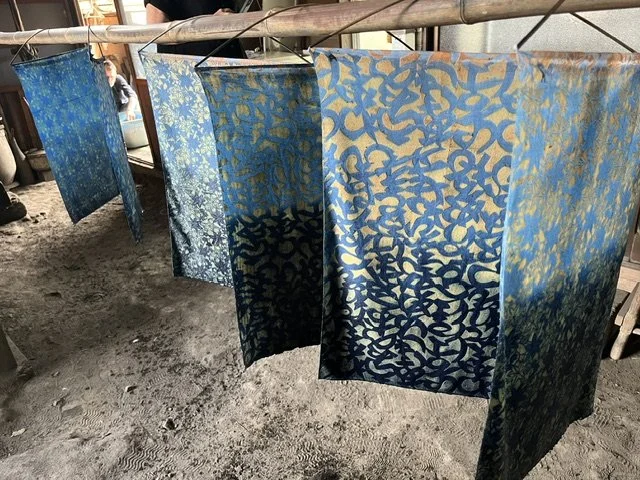
Katazome hanging on shinshi after dyeing with indigo
Why Katazome Still Matters
In a world increasingly shaped by digital printing and mass production, katazome offers something profoundly human.
It teaches patience.
Observation.
Respect for process.
It reminds us that cloth can hold memory, that repetition can become meditation, and that the human hand still carries meaning.
Katazome is more than pattern.
It is a conversation between history, material, and maker — one that continues, stitch by stitch and stencil by stencil, into the next generation.